
Em um tempo em que a arte e a linguagem frequentemente são tratadas como habilidades isoladas ou meramente utilitárias, torna-se necessário recuperar sua verdadeira finalidade. Na tradição clássica, tanto a arte quanto a linguagem não existem apenas para expressão, mas para formação. Elas educam o olhar, ordenam o pensamento e conduzem o aluno à contemplação daquilo que é verdadeiro, bom e belo.
Foi nesse espírito que vivenciamos a Art and Literacy Fair da For Life School.
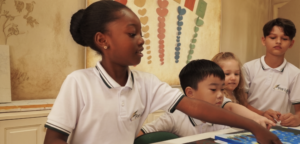
Ao longo das semanas que antecederam a feira, cada turma do Ensino Fundamental foi conduzida por um caminho que uniu arte e leitura — não como atividades separadas, mas como expressões complementares de uma mesma busca: compreender e interpretar a realidade com profundidade.
Os alunos do primeiro ano, em seus primeiros passos na alfabetização, foram também introduzidos à alfabetização do olhar. Suas produções revelam o início dessa formação: aprender a observar, a reconhecer formas, cores e composições, e a perceber que há ordem e beleza mesmo nas construções mais simples.
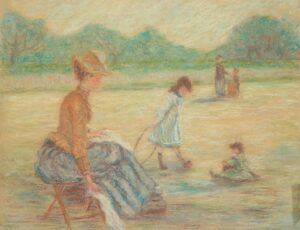
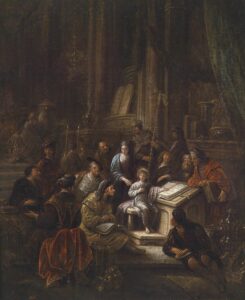
Nas turmas seguintes, esse processo se aprofunda. Os alunos passam a compreender que cada obra de arte e cada texto carregam significado. Não estão apenas diante de imagens ou palavras, mas de ideias. Ao se debruçarem sobre obras clássicas e produções literárias, exercitam a atenção, a interpretação e o pensamento.
Já os alunos mais velhos são desafiados a dar um passo além: não apenas observar, mas julgar. O que torna esta obra bela? O que este texto comunica? Qual é a intenção por trás daquilo que foi criado? Nesse momento, arte e linguagem se encontram de forma ainda mais evidente, pois ambos exigem discernimento, clareza e maturidade intelectual.
As oficinas de arte, por sua vez, trouxeram uma dimensão prática essencial a esse processo. Nelas, os alunos experimentaram técnicas diversas — pintura, colagem, relevo — sempre orientados por um princípio fundamental: fazer bem feito. Não se tratava de produzir rapidamente, mas de trabalhar com cuidado, paciência e propósito.
Mais do que os trabalhos expostos, o que se tornou visível na feira foi o processo formativo de cada aluno. Cada obra e cada produção textual carregam esforço, tentativa, correção e aprendizado. Carregam também algo ainda mais importante: a formação do olhar e do pensamento.
Aprender a ler bem e a ver bem são, no fundo, movimentos semelhantes. Ambos exigem atenção, silêncio interior e disposição para compreender o que está diante de nós.
A Art and Literacy Fair não foi apenas uma exposição. Foi a manifestação concreta de um princípio: educar não é apenas transmitir conteúdo, mas formar seres humanos capazes de perceber, interpretar e responder à realidade com verdade, bondade e beleza.
A Reflection on the Art and Literacy Fair at For Life School
In a time when art and language are often treated as isolated or merely utilitarian skills, it becomes necessary to recover their true purpose. In the classical tradition, both art and language exist not only for expression, but for formation. They educate the eye, order thought, and lead the student toward the contemplation of what is true, good, and beautiful.
It was in this spirit that we experienced the Art and Literacy Fair at For Life School.
In the weeks leading up to the fair, each elementary class was guided along a path that united art and reading not as separate activities, but as complementary expressions of a single pursuit: to understand and interpret reality with depth.
First grade students, in their early steps toward literacy, were also introduced to the literacy of the eye. Their work reveals the beginning of this formation: learning to observe, to recognize forms, colors, and compositions, and to perceive that there is order and beauty even in the simplest creations.
In the following grades, this process deepens. Students begin to understand that every work of art and every text carries meaning. They are not merely encountering images or words, but ideas. As they engage with classical works and literary texts, they exercise attention, interpretation, and thought.
Older students are then challenged to go further: not only to observe, but to judge. What makes this work beautiful? What does this text communicate? What intention lies behind what was created? At this stage, art and language meet even more clearly, as both require discernment, clarity, and intellectual maturity.
The art workshops, in turn, brought an essential practical dimension to this process. In them, students explored a variety of techniques such as painting, collage, and relief, always guided by a fundamental principle: to do things well. The goal was not speed, but careful, patient, and purposeful work.
More than the works displayed, what became visible at the fair was the formative process of each student. Every piece of artwork and every written production carries effort, attempts, correction, and learning. It also carries something even more important: the formation of the eye and of thought.
Learning to read well and to see well are, at their core, similar movements. Both require attention, inner stillness, and a willingness to understand what is before us.
The Art and Literacy Fair was not merely an exhibition. It was the concrete expression of a principle: education is not only about transmitting content, but about forming human beings who are capable of perceiving, interpreting, and responding to reality with truth, goodness, and beauty.